progress on Bovine TB and animal welfare outlined at Balmoral veterinary event
Government and stakeholder collaboration on bovine TB eradication is moving from strategy to delivery
DAERA Minister outlines progress on Bovine TB and animal welfare at Balmoral veterinary event
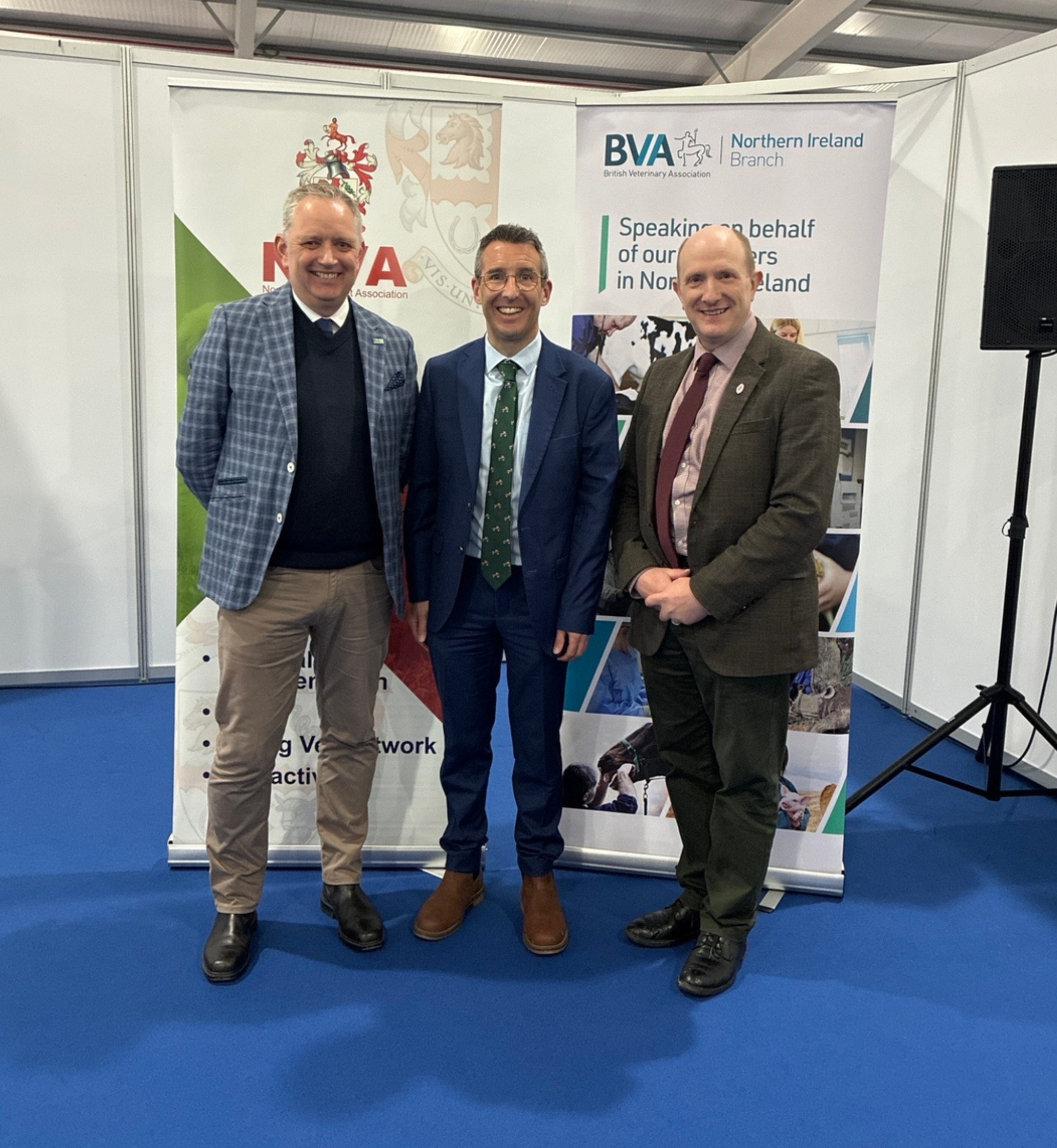
Government and stakeholder collaboration on bovine TB eradication is moving from strategy to delivery, DAERA Minister Andrew Muir has signalled at the Balmoral Show on May 13th.
During an address to the British Veterinary Association/Northern Ireland Veterinary Association reception at the Balmoral Show, Minister Muir recognised the “unacceptable costs” bovine TB had imposed on farmers’ wellbeing, income and also the public purse.
But while he acknowledged there were no quick fixes, he insisted progress was being made and described the TB Partnership Steering Group’s (TBPSG) ‘Blueprint for Eradication’ as a “bold step forward for government-stakeholder cooperation”.
Minister Muir told attendees: “Procurement is about to commence for Northern Ireland-wide on-farm biosecurity assessments and advice, with around 700 farms per year expected to benefit. Progress is also being made on movement testing, alongside work to improve farmers’ access herd bTB history data.
“DAERA expanded the use of interferon gamma blood testing and are actively working towards establishing the basis for its wider use.
“We are also is working with the TBPSG on new criteria for alternative control herds, while working with DAFM to deliver an innovative cross-border project to tackle TB in the north-west.
“In addition, significant progress has been made in preparing a consultation on potential wildlife intervention options, which will issue shortly, following completion of the required environmental assessments and engagement with the Partnership Group.
“These measures represent concrete delivery against my commitment to change the trajectory of TB in Northern Ireland, reflecting the central role of the veterinary profession in that effort.”
In a wide-ranging address, the Minister also focused on Northern Ireland’s response to Bluetongue and Avian Influenza outbreaks, the Department’s new measures in tackling Bovine Viral Diarrhoea and also provided an update on the DAERA Animal Welfare Pathway and the further development of equine traceability measures.
With the arrival of warmer weather, he urged vigilance for signs of the Bluetongue virus, reminding farmers they needed to maintain strict biosecurity measures, source their animals responsibly and immediately report any suspicions of Bluetongue to DAERA.
The Minister added: “To support disease prevention, on 15 April, I authorised the move from the requirement for a specific licence to a general licence for BTV-3 vaccination, making vaccination more accessible. I strongly encourage farmers to discuss vaccination with their veterinary practitioner.”
While the lifting of the Avian Influenza Housing Order for poultry from 5 May was welcome, he stressed all bird keepers, regardless of flock size, must continue to do their bit to minimise the ongoing risk of infection.
While good progress had also been achieved by herd keepers in addressing the challenge of Bovine Viral Diarrhoea, the introduction of herd restrictions remain essential to prevent the spread of the disease spread and would continue to be introduced on a phased basis over a 16-month period.
“By continuing to work closely with Animal Health and Welfare NI, the delivery partner for the BVD eradication scheme, and the wider industry, we can continue the journey towards a BVD‑free Northern Ireland,” the Minister said.
On the issue of equine traceability, the Minister said over 2,500 equine establishments had been registered in Northern Ireland and work was continuing with the Irish Government to improve information-sharing on cross-border movement of horses, in line with the recommendations of the Professor Wall Report Action Plan.
Progress had also been made on animal welfare issues, with the publication of the Animal Welfare Pathway, the delivery of a review of dog breeding practices, the launch of a dog ownership campaign, plans to introduce Lucy’s Law and the laying of legislation on mandatory CCTV in abattoirs.
Consultations have also been launched last week on the use of aversive training devices, microchipping reform, an inflationary increase to dog licence fees and the regulation of rescue and rehoming organisations.
These reforms are about modernising the framework, improving compliance, and ensuring that welfare standards are meaningful and enforceable.